AQUATIC WEED CONTROL
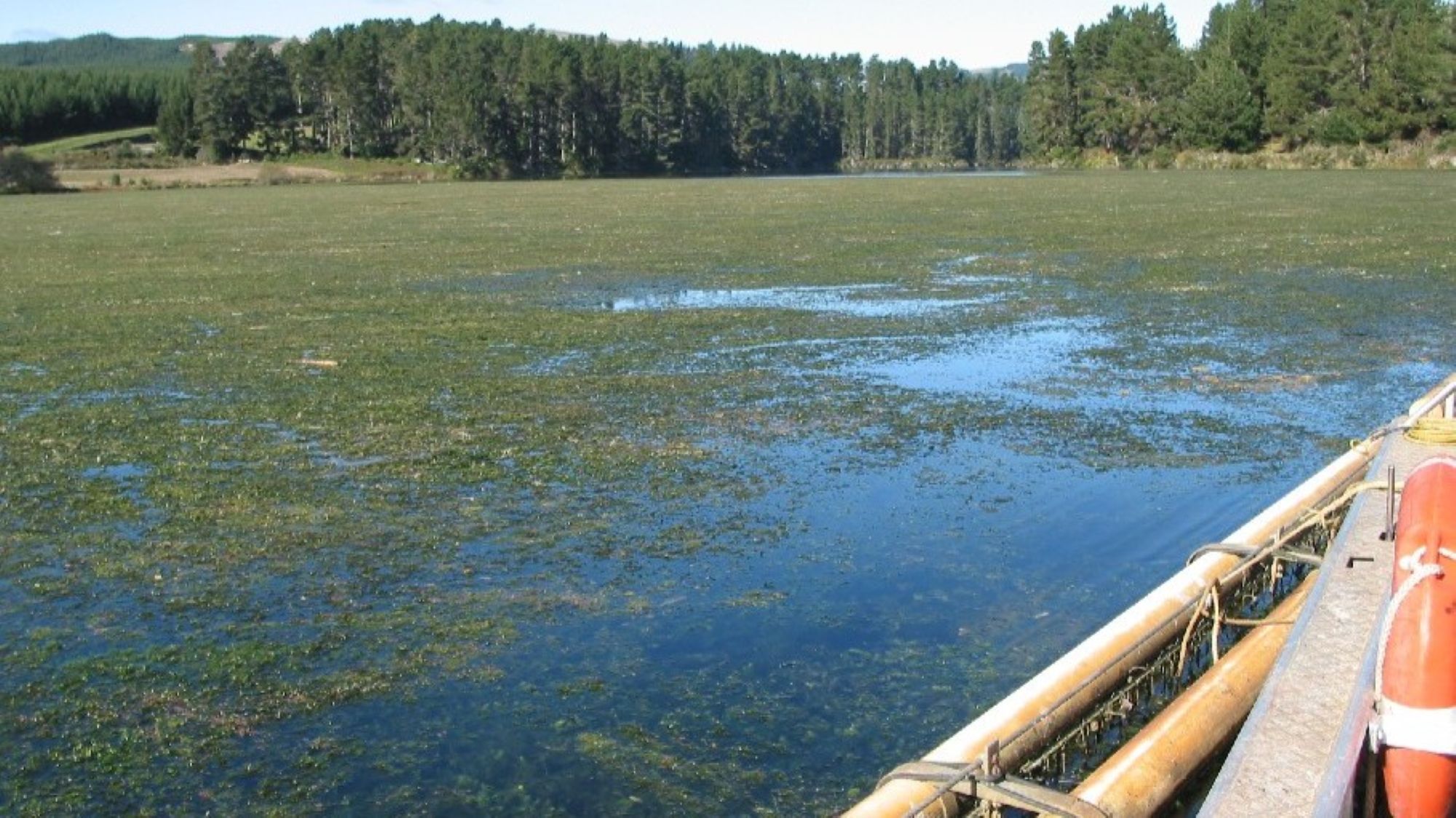
Hornwort near the boom at Lake Whakamaru. Photo: John Clayton, Earth Sciences New Zealand
Managing invasive aquatic lake weed is important for protecting freshwater biodiversity, maintaining water recreation activities, and maintaining our hydro generation operation on the Waikato River .
We use a range of management tools including lake booms, a shredder, mechanical harvesting and screen cleaning to keep the weeds clear of hydro stations’ water intake vents.
We also use a herbicide called diquat, which is effective on dense weed. Diquat, at the concentration we use, poses no risk to human health (see Earth Sciences New Zealand (NIWA)). But as a precaution, it is recommended people don’t swim or fish in areas of lakes or rivers treated with diquat for 24 hours after spraying has taken place. Keep an eye out for signs and other notifications.
Our aquatic weed control programme is part of a wider regional effort led by Waikato Regional Council.
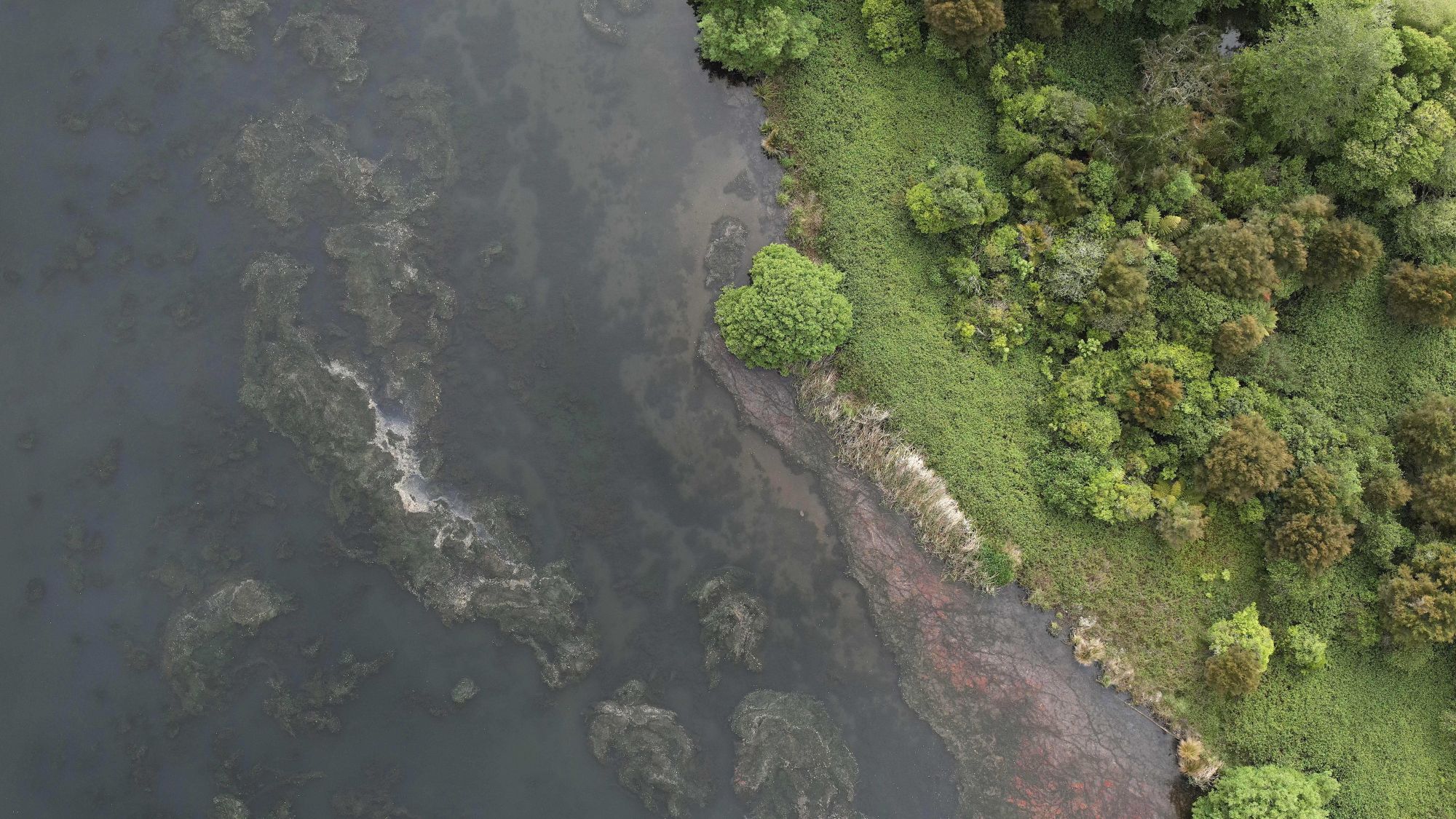
Example of hornwort near the shore of Lake Whakamaru, November 2024. Photo: Mercury Geospatial Team
What weed is being detected?
Exotic aquatic weeds, such as hornwort and lagarosiphon, have significantly impacted the biodiversity of the Waikato River.
These invasive species form dense underwater mats that outcompete native plants for light and nutrients, reducing habitat diversity.
As a result, native fish and invertebrates lose critical spawning and feeding areas, leading to declines in their population.
The altered ecosystem also affects water flow and oxygen levels, further stressing indigenous species and disrupting the river’s natural ecological balance.
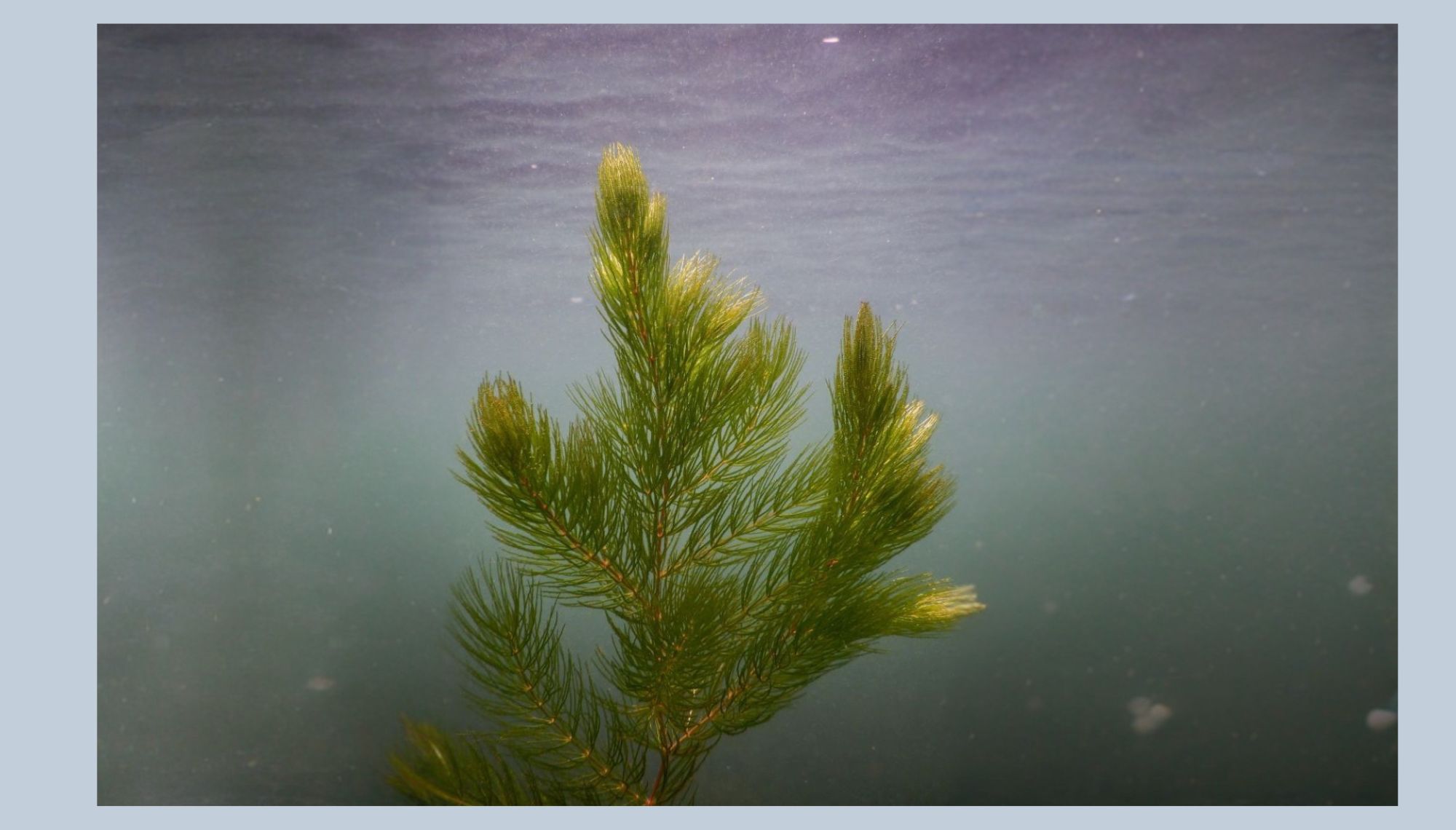
Hornwort is a submerged, free-floating or lightly anchored perennial aquatic plant. Photo: Earth Sciences New Zealand
What action is being taken?
We use diquat to control hornwort in the lakes and river passages where we operate our hydro stations.
It is a herbicide that has been used in New Zealand for many years for submerged weed control. It is registered for freshwater use in New Zealand.
It is typically applied by helicopter or boat to select areas. Using diquat for aquatic weed control is a permitted activity under rule 6.2.4.9 of the Waikato Regional Plan, administered by the Waikato Regional Council.
We apply diquat to four lakes in October-November, and February-March. Each site takes about a day to complete, weather dependent:
- Lake Aratiatia - 25ha
- Lake Atiamuri - 25ha
- Lake Waipapa - 25ha
- Lake Whakamaru - 60ha
- Mangakino foreshore - 4ha (at the request of Taupō District Council)
What's happening at these lakes?
We have recorded a consistent flow of hornwort weed near our hydro dams and hydro stations.
At Lake Whakamaru, more than 19,500 cubic meters of weed were shredded during 2025. That’s enough to fill about seven, 50m Olympic-sized swimming pools.
At Lake Aratiatia, more than 8000 cubic metres of weed were removed from the water intake screens at the Aratiatia Hydro Station.
How does diquat work?
Diquat is sprayed on to the leaves and stems of invasive weeds so it can be rapidly absorbed. It dehydrates the plant tissue causing damage to the cells when plants use light for growth (photosynthesis).
Diquat is a gel form, which helps increase spraying accuracy and reduce the chance of any drift.
Are there any health risks with diquat?
Diquat has no risk for human health at the concentrations used for submerged weed control under prescribed use. (see Earth Sciences New Zealand (NIWA))
What do I need to do?
As a precaution, it is recommended lake and river users in New Zealand don’t swim or fish in areas of lakes or rivers treated with diquat for 24 hours.
Be aware of signage, advertisements, or other notifications which inform lake and river users of treatment timing.
Who is involved in this work on the Waikato River?
•Waikato Regional Council is the lead agency, managing the planning, compliance and public notifications for spraying operations. Read more here.
•Land Information New Zealand oversees aquatic weed management in major hydro lakes like Lake Karāpiro, working with partners under the Lake Karāpiro Aquatic Weed Management Group. Read more here.
•Mercury, Waipā District Council, local iwi, and community groups like Waikato RiverCare often participate in planning and restoration efforts alongside spraying programmes near Lake Karāpiro.
Useful links:
• Diquat use for submerged weeds, Earth Sciences New Zealand
• Freshwater biosecurity, Earth Sciences New Zealand
• Biosecurity, Waikato Regional Council
• Biosecurity and biodiversity, Land Information New Zealand
To learn more or to speak with our project team, please email: stakeholder.hydro@mercury.co.nz