APRIL 2026 NEWSLETTER
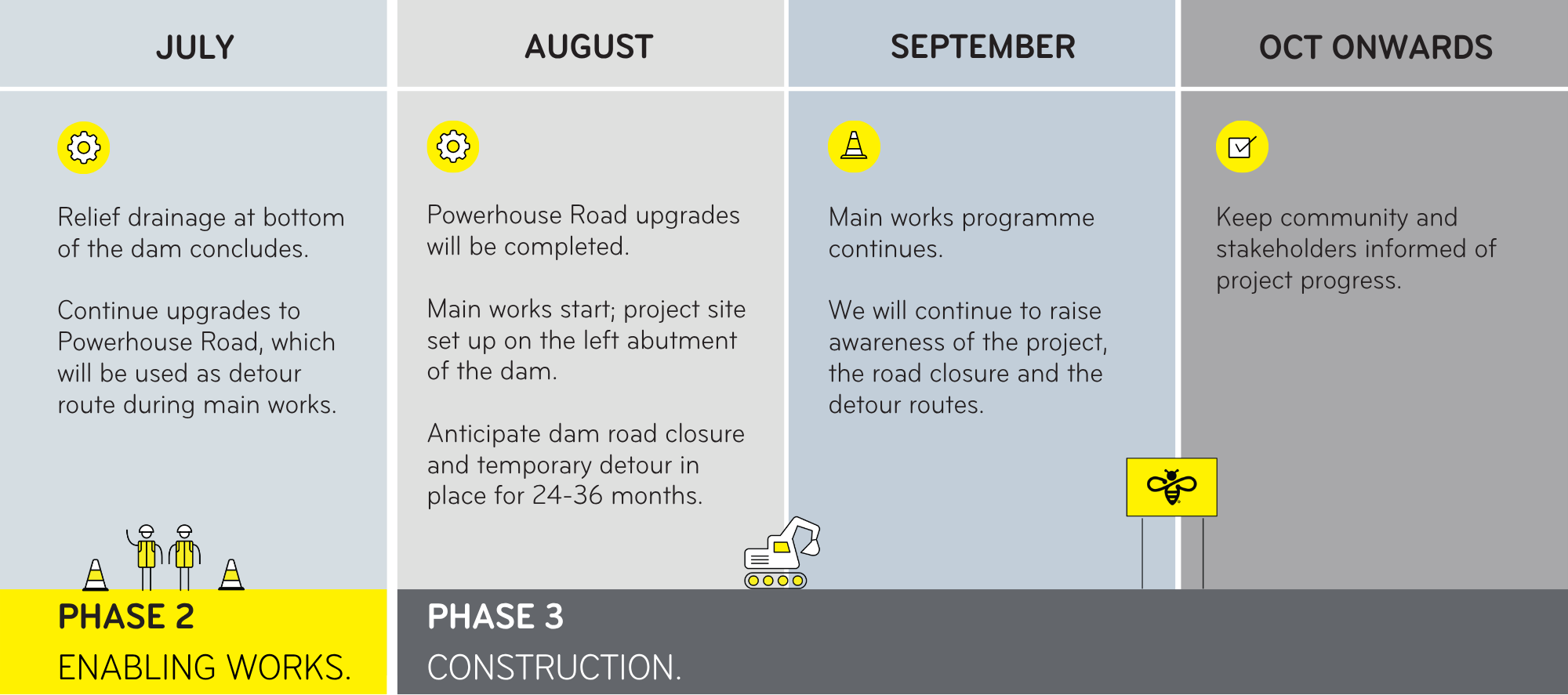
We are well into our relief drainage work at the bottom of the dam and expect to be finished by late June.
Arapuni Road across the dam is closed from Tuesday, 1 September 2026, for 24-36 months. A one-lane detour route will open, managed by traffic lights, along Powerhouse Road.
People using the Powerhouse Road detour during peak morning and afternoon times should add 20 minutes to their travel time. During off peak, the extra travel time is about 10 minutes.
The purpose of the detour is to continue to let local communities connect for work purposes, to attend schools, for people who have farms and need to use small vehicles to travel to properties on either side of the dam.
The detour is safe for cars, light vehicles, motorcycles, school buses, emergency services, rigid trucks up to 8 meters in length (measured from the front bumper to the rear of the vehicle).
Freight/heavy commercial vehicles and long-distance travel should use state highway routes.
For safety, we will close the western end of the swing bridge where it connects to Powerhouse Road.
We have made changes to Powerhouse Road so it is safe for Waikato River Trail users and safe to use as a detour route when the main works start.
The Arapuni Hydro Dam is operated by Mercury and forms an essential part of the Waikato Hydro System, which provides about 10% of Aotearoa New Zealand’s electricity. The Arapuni Hydro Dam and nearby Arapuni Hydro Station began operating in 1929. As the first high dam on the Waikato River, it is recognised for its engineering significance and is a listed historic heritage item.
The hydro station’s eight turbines have an installed capacity of 196MW, generating up to 805GWH per year, that’s enough to power about 100,000 average homes with renewable energy.
Explore general information about the Arapuni Hydro Station.
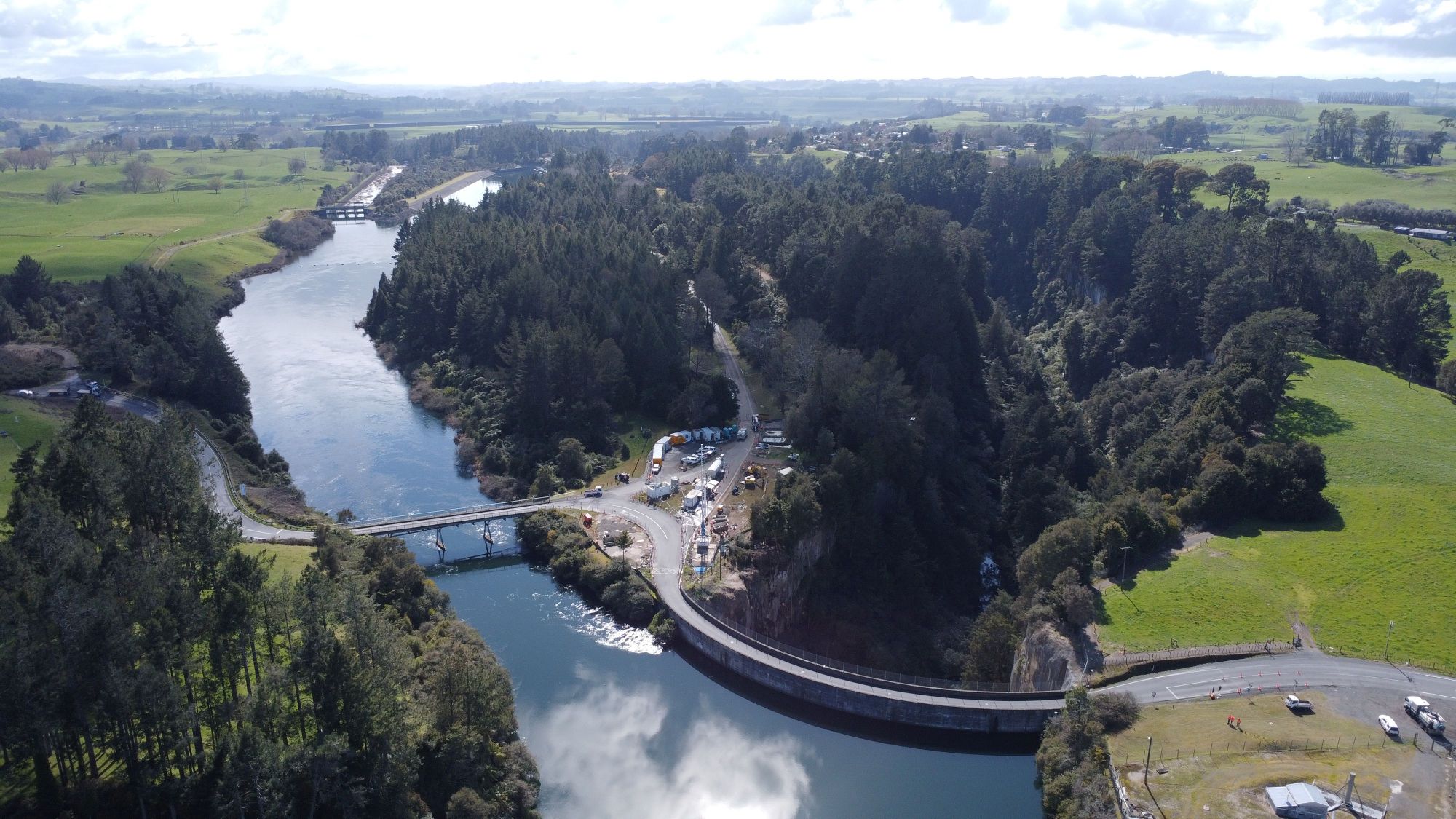
The jet grouting trial work site was set up on the left abutment from July-September, at the Arapuni Hydro Dam.
An engineering study shows the Arapuni Hydro Dam is safe and fit for everyday use, but work needs to be done to improve the left abutment to protect it from the risk of water seepage. Seepage happens when very small amounts of water soak around the dam abutment. A controlled amount is expected and needs to be managed, but over time too much seepage will result in increased pressures and a risk of internal erosion.
Watch our video explaining how a seepage cutoff wall works.
We have assessed options to install a seepage cutoff wall in the left abutment; this is a concrete barrier that prevents seepage. We have also been working on geotechnical assessments which will help inform the work design and construction of the cutoff wall.
Since mid-2024, we’ve been in discussions with our iwi partners, Raukawa, Ngaati Koroki Kahukura and Ngaati Hauaa, as well as the South Waikato District Council, Waikato Regional Council, Waipā District Council and other key stakeholders to understand the impacts of the work we have planned for the dam. We have kept the community informed as we developed our plans and we will continue to update everyone as the project progresses.
The Arapuni Dam is the oldest Mercury dam (in operation). It was built between 1924 and 1929 and was the first government-built high dam on the Waikato River.
The dam has had remediation treatment for leakage, dating back to its construction. Following the first lake fill in 1930, significant seepage of water traveling through the left abutment from the headrace to the dam face was observed. The lake was lowered, and seepage controls were retrofitted.
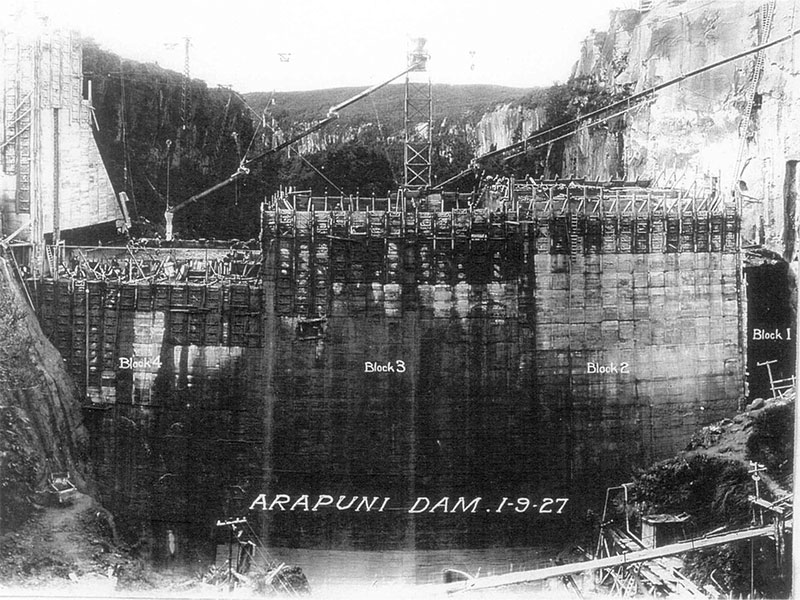
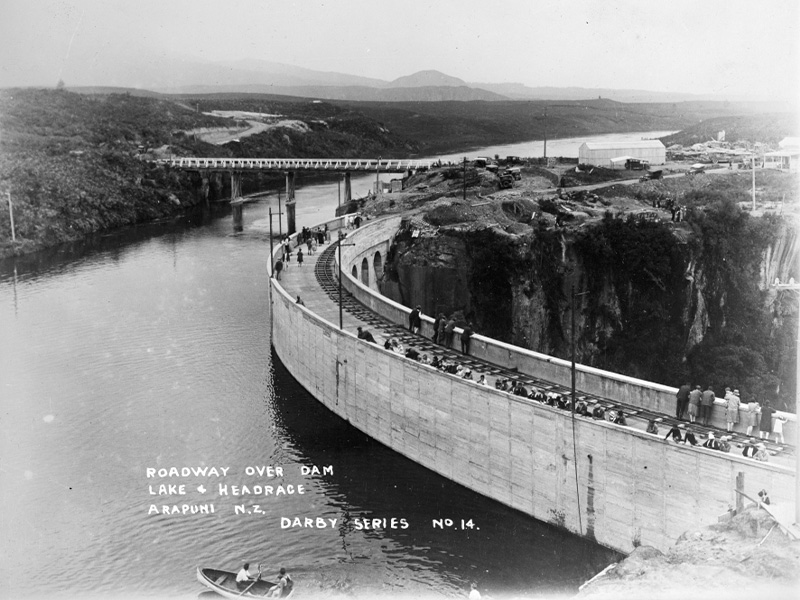
The Arapuni Hydro Power Station was constructed between 1924 and 1929.
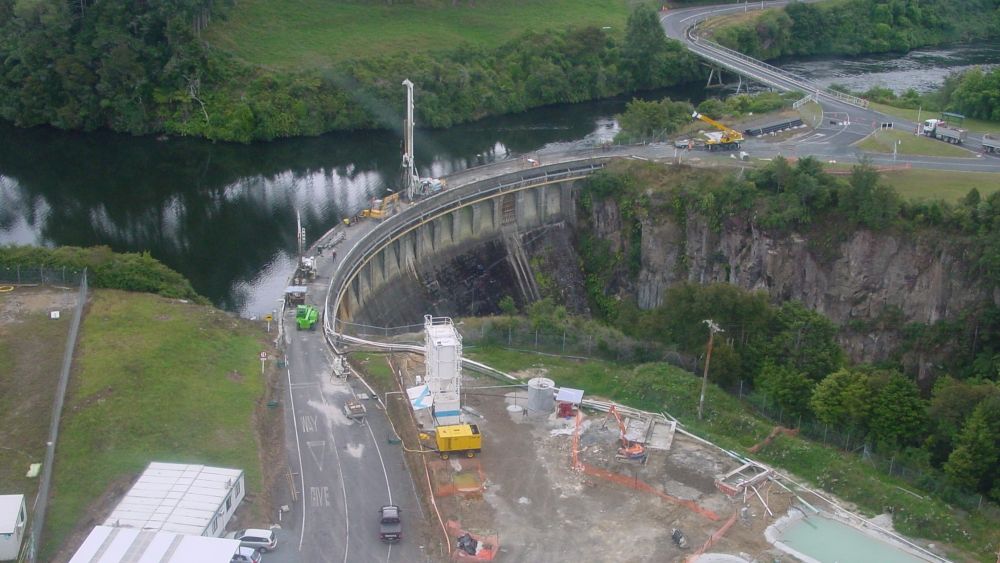
Major remediation work was completed on the dam in the mid-2000s.
Over the life of the dam there have been several improvements made to the seepage controls, with the most recent in mid-2000s.
This involved remediation work to construct a concrete cut-off wall under the dam, without disrupting power generation or causing environmental damage. This was a pioneering effort in the field of dam engineering.
Watch how earlier work helped manage seepage at Arapuni Dam.
The project won multiple engineering awards, including the Shell Environmental Excellence Merit Award in 2007 and the New Zealand Engineering Excellence Award in 2008. The work was recognised for its innovative approach to dam remediation while maintaining operations and minimising environmental impact.
The project was led by an alliance group comprising Mighty River Power (now Mercury), Brian Perry Civil and Trevi Group, a specialist in underground engineering. The three have reformed to work together on the remediation of the left abutment at the Arapuni Dam.
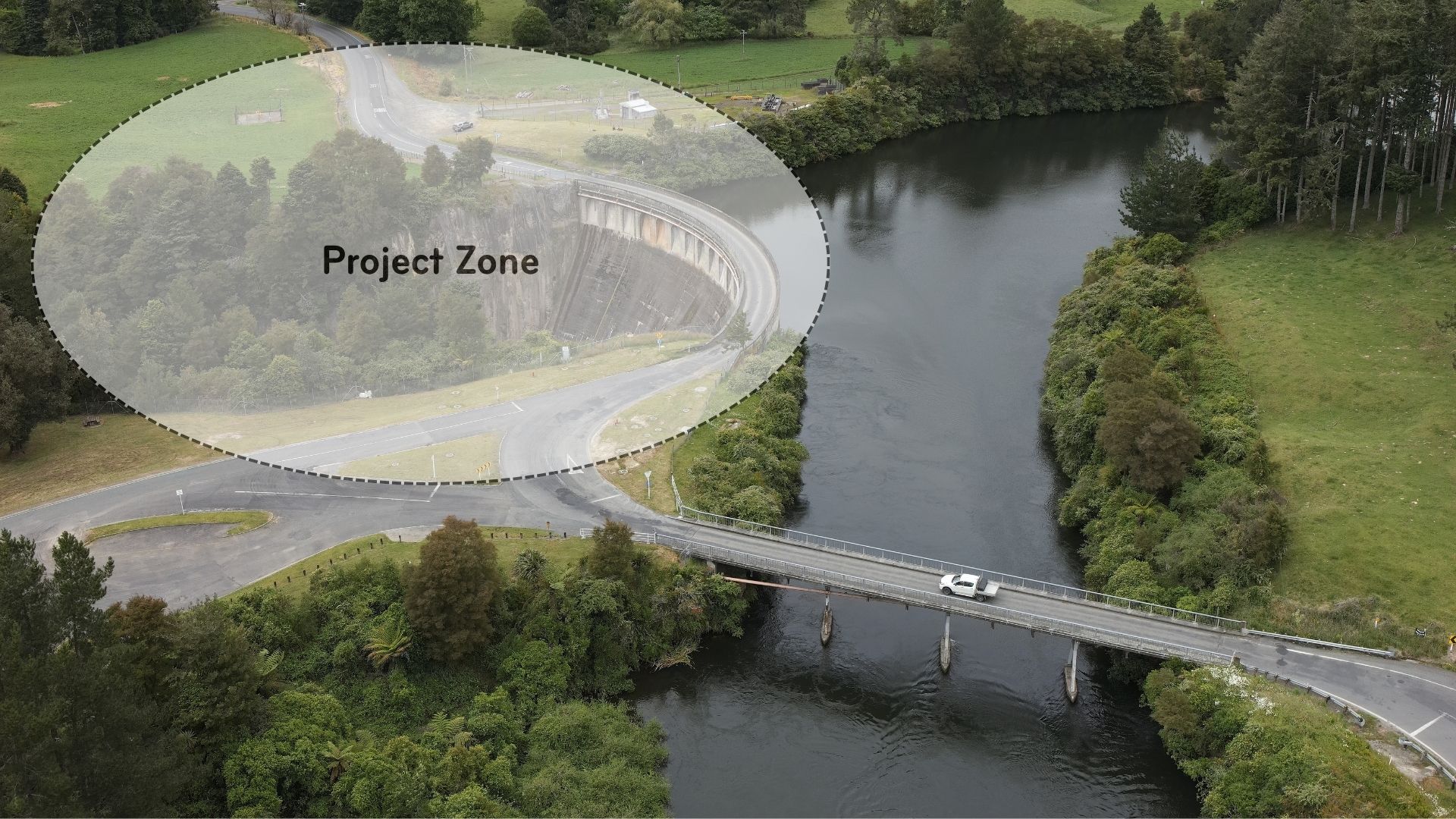
The left abutment of the dam is where our current remediation work will be focused.
Ongoing monitoring indicates that the remediation work completed in the mid-2000s was extremely effective. However, seepage changes were identified in the left abutment following two distant earthquakes in 2016.
In 2024, we began investigating options to install a seepage cutoff wall in the left abutment, as a modern equivalent to manage the seepage.
In 2025, we began early works which involved relocating existing subsurface sensors and installing new ones to help us understand what’s happening in the left abutment. We now have more than 200 subsurface sensors providing real-time data. This information will help us respond to any changes in the left abutment as we carry out the main works programme.
We completed a jet grouting trial from July to September 2025.
This is a soil improvement technique used to strengthen and stabilise the ground. It has been used in several hydro dam remediation projects around the world. During September and October, we studied the results of the trial which helped inform and plan the main works for 2026.
Download our info sheet on jet grouting.
We started a relief drainage programme in January 2026 and completed it in August 2026.
Hydro dams hold back large volumes of water, which exerts significant pressure on the dam structure and the surrounding geology. Relief drainage is used to help reduce pore water pressure in the dam foundation and abutments and prevent uplift pressure that could destabilise the dam base.
Watch our video on the relief drainage programme.
We submitted a business case to our board which was approved in late 2025. We have finalised the main works timeline and we will start construction on 1 September 2026.
We are well into our relief drainage work at the bottom of the dam and expect to be finished by late June.
We’ve almost completed our early work programme, the data we’ve gathered in the past 18 months will help us kick into the main works in 2026.
It’s been almost a year since we kicked off our early works programme and there are some key activities planned in the coming months.
This is our second newsletter to update the community on the work we’re doing on the Arapuni Hydro Dam. We’ve made a lot of progress and we want to share what’s coming up through 2025.
This is our first newsletter to update the community on the work we’re doing on the Arapuni Hydro Dam.
We have confirmed the final design details for constructing an underground, seepage cutoff wall in the left abutment of the dam. This is a concrete barrier that will help protect the dam from the risk of water seepage.
We have been focusing on the enabling works since mid-2024, to verify the methods and technical assessments to install the cutoff wall. We will start the main works programme on 1 September 2026. The dam will be closed for 24-36 months.
Yes. The road across the dam will be closed for 24-36 months so we can safely work on the left abutment. We will have a team of contractors and equipment moving around the work site, so keeping everyone safe is paramount. We aim to work during the day and then possibly at night so we can get the job done quickly and reopen the road as soon as we can.
Powerhouse Road was successfully used during earlier works in 2005, but the new project is longer and must meet higher modern safety standards. We are working on upgrades so it can be safely used as a detour route during the multi-year timeframe of the project.
The purpose of the detour is to continue to let local communities connect for work purposes, to attend schools, for people who have farms and need to use small vehicles to travel to properties on either side of the dam.
People using the local detour during peak morning and afternoon times should add 20 minutes to their travel time. During off peak, the extra travel time is about 10 minutes.
No. Engineering assessments confirmed that Powerhouse Road cannot safely accommodate High Productivity Motor Vehicles or long heavy units, oversized vehicles, two-wheel tractors, tractor and trailer units, and extended freight trucks over a sustained period. Restrictions are required due to the route’s physical constraints, narrow shoulders, tight geometry, gradients, and a one ‑lane traffic‑light‑controlled section that makes it unsafe for HPMVs and long units.
Cars, light vehicles, motorcycles, school buses, emergency services, rigid trucks up to 8 meters in length (measured from the front bumper to the rear of the vehicle)
HPMVs and large freight will need to use the State Highway network (SH1/SH21/SH3 via Tamahere) if they wish to travel from east to west and vice versa without going through Arapuni.
No. The detour is not safe for walkers or cyclists to use with vehicle traffic. We’re working with Waikato River Trails to make sure users are aware of the closure.
If more cyclists arrive expecting to cross the dam or use the detour, we’ll step up communications and look at other ways to share this information. In situations where it’s necessary and feasible, we may use our site vehicles to transport bicycles using bike racks. However, this is not intended to become a regular solution, as we are not providing a shuttle service.
No. To keep everyone safe, we will close the western end of the swing bridge where it connects to Powerhouse Road. Pedestrians and cyclists won’t be able to use the walking trails near Powerhouse Road, but the Waikato River Trail will remain open and available for people to use on the village side of the river.
Engineering advice suggests keeping this open is an unacceptable risk to public safety, previously in the mid-2000s we experienced vehicles stopping in the single lane section with the swing bridge was open that caused significant operational and safety impacts to the detour.
Yes. The cafe will continue operating as usual, and any changes to their hours will be made solely at their discretion and communicated through their own channels.
To support visibility throughout the detour period, we have worked with the cafe to create roadside signage clearly signaling that the cafe remains open. These signs will be installed shortly before the detour becomes operational to ensure road users know the cafe is still open.
There will be limited opportunities for parking and to fish from the headrace bridge.
All other locations, such as tailrace bridge and dam, will be restricted during construction with the detour in place, as these areas will be closed for safety. Clear signage will be installed to indicate restricted access, and our on‑site team will be available to provide guidance if needed. Sightseeing around the dam will also be affected, particularly for those who usually walk through the dam area or use the car park. These areas will be cordoned off for construction activity and access changes. We will communicate any restrictions or updates early and clearly so people are aware.
Yes. We know fuel prices are high and that detours add time and cost. This detour has been designed to minimise delays (around 10–12 minutes), and we encourage people to plan ahead using tools like the NZTA Journey Planner and council and NZTA updates to find suitable routes. While fuel prices are outside the project’s control and increased after traffic planning was completed, the detour is essential to deliver this work safely and without significantly extending the project. We will continue to provide timely updates so people can plan their travel and move safely and efficiently.
We plan to meet again with the community later in 2026, after we start the main works of the project.
While there will be no change to the electricity generation, doing the required works now ensures that future generations can continue to benefit from this integral hydro asset. The power station will continue to operate as normally during the work.
We will continue to engage with stakeholders and local community to let them know what is planned. If you would like to contact the project team, please email: project.arapuni@mercury.co.nz.