TEST YOUR SHOWERHEAD
Place a 10L bucket under the flow. If it fills in under a minute, it's using more water (and power) than needed.
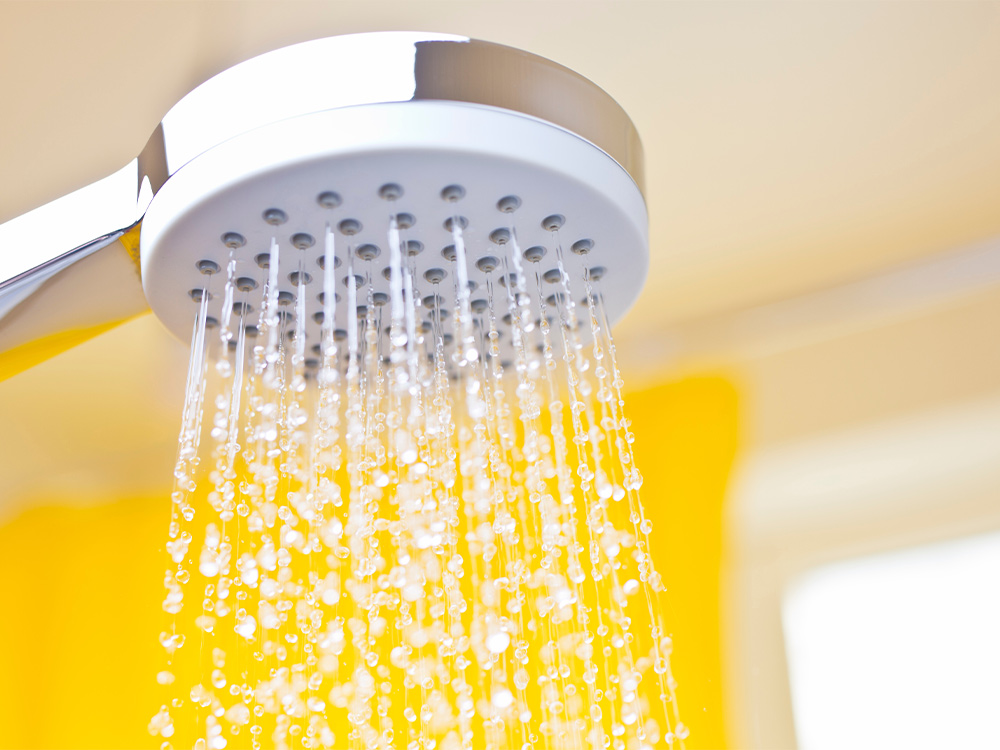
Hot water is another major power user. Here are some ways to use less without sacrificing the comfort of a warm shower.
Place a 10L bucket under the flow. If it fills in under a minute, it's using more water (and power) than needed.
Efficient showerheads reduce flow without sacrificing pressure. Look for ones with a 9L/min or less rating.
Even a small leak wastes hot water (and energy). Often, it's just a washer that needs replacing.
A flow control aerator can help reduce the amount of water you use while still giving good pressure.
Otherwise hot water flows into the pipes automatically – even if you’re not using it.
When shaving or washing dishes, avoid leaving the hot tap running – fill the sink instead.
Cold water washing uses much less energy and can be gentler on clothes.
Wait until your washing machine or dishwasher is full. It saves water, hot water, and energy.
If your dishwasher or washing machine has an eco-mode, use it!
If your hot water cylinder is older than 2002, add a wrap and insulate the pipes. Always check with a professional if you’re not sure.
This is the ideal setting - hot enough to stop bacteria, but not hot enough to waste power.
Any signs of water around the cylinder or pipes? Call a plumber.
Power saving tips on this page are based on tips fromEECA.
Heating is one of the biggest power users at home, especially in winter. These tips can help you stay warm while using less energy.
There are lots of small ways to reduce energy use day to day – even from appliances and tech you might not think about.