MAHINERANGI WIND FARM
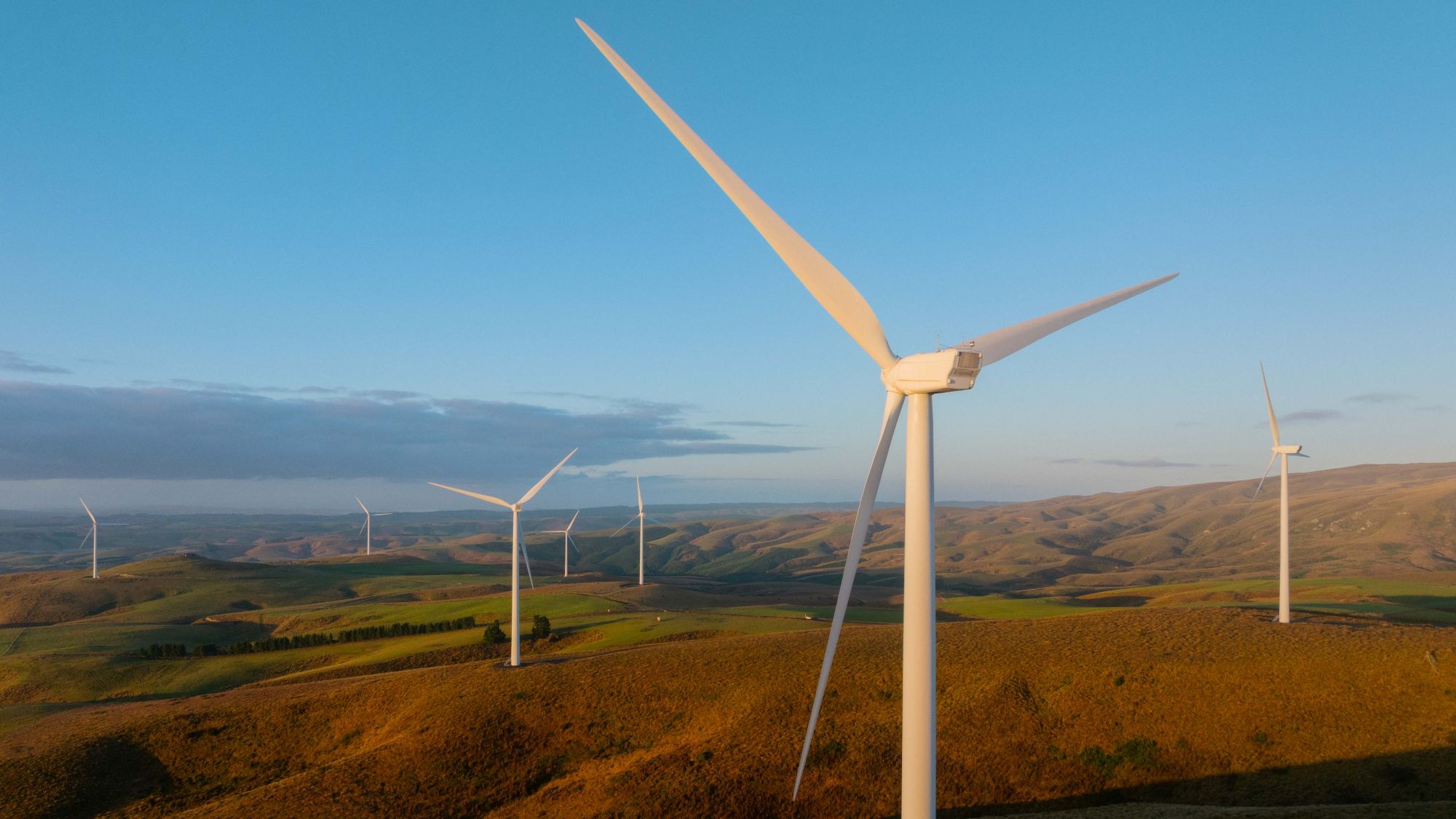
Mahinerangi Wind Farm (Stage 1) was commissioned in 2011. Mercury is applying to the Fast-track Approvals Act to construct Stage 2.
Background
Mahinerangi Wind Farm has been generating renewable energy for New Zealand since it was commissioned in 2011.
The 12-turbine, 36MW wind farm in Otago has been a strong performer. It has recorded an annual generation of 113GWh during its first 14 years of operation, enough energy to power the equivalent of about 14,000 residential homes every year.
Resource consent to build Mahinerangi was granted in the late 2000s and provided for up to 100 turbines with an installed capacity of 200MW.
We are now progressing plans to develop the balance of the consented wind farm with improvements to accommodate advances in technology.
The Stage 2 wind farm project will be known as Puke Kapo Hau.
This name was gifted to Mercury from Te Rūnaka o Ōtākou and it means “the hill that catches the wind”.
The name describes the landscape around Mahinerangi Wind Farm, which “catches the wind”, as well as linking to the function of wind farms.
Next Steps
We have achieved Fast-track approval to develop Puke Kapo Hau Wind Farm, stage 2 of our Mahinerangi Wind Farm project.
Puke Kapo Hau will comprises up to 44 turbines, installed capacity of up to 190MW and an annual generation of about 550GWh, enough to power the equivalent of about 78,000 average homes every year*. The full wind farm site covers about 1700ha on the eastern foothills of Lammermoor Range, about 5km north of Lake Mahinerangi and 50km west of Dunedin.
The project will now progress through final development activities in preparation for a final investment decision. Investment is anticipated between $500m-$600m. Construction could start by the end of 2026, and the wind farm project could be completed in three years' time.
*based on NZ average household electricity consumption of 7,000 kWh per annum.
Maps
Click here for map of wind-turbine locations.
Click here for map of the planned transmission line for Puke Kapo Hau and the Battery Energy Storage System.
Timeline

We submitted our plan for Puke Kapo Hau to the Fast-track process and it was approved in July 2026. The plan still needs to be approved by our board before it can move to the construction phase.
Fast-track requires more detailed information upfront for an application to be considered. However, the benefit is a streamlined, all-in-one approval process that helps move quality projects forward more efficiently.
The process took about nine months. An independent panel made the final decision, and you can read more about the process on the Fast-track website.
No. Regardless of process, we remain committed to developing and delivering our projects by engaging with iwi, community and stakeholders (landowners, councils, Department of Conservation), always considering their thoughts and concerns on the impact on the environment.
We’ve been engaging with the neighbours and local community members including Lee Stream School (we love Lee Stream School). We are building a mailing list to keep local people in the loop and to hear concerns and questions, you can join on: mahinerangiwindfarm@mercury.co.nz.
Yes. A key difference with our project is that it has already been through an Environment Court process in 2010 and so the environmental effects of the original wind farm are accepted. Our updated plan includes new wind turbine technology which will reduce the number of wind turbines we’ll need, therefore reducing the project footprint.
We will need about 75 full-time workers on average over three years to construct the wind farm. At the peak of construction, there will be a workforce of about 300 people. These are specialised roles and people with these skills can be found in the Otago and Southland regions.
The new wind farm will help increase renewable energy generation and overall electricity supply for New Zealand. It will deliver 55% of the annual new generation required to meet forecast energy demand and make a significant contribution to meeting the Government’s emission reduction targets.
It will support electrification of the economy and support reduction in greenhouse gas emissions by displacing gas and coal generation.
We have invested $1b over two years in three new energy projects that will deliver 1.1TWh. That includes the Kaiwera Downs Wind Farm Stage 2 in Southland, the Kaiwaikawe Wind Farm in Northland and the expansion to our Ngā Tamariki Geothermal Station near Taupō.
Our plan to develop Mahinerangi, and options to develop the proposed Waikokowai Wind Farm in the Waikato and Puketoi Wind Farm in Tararua, along with possible geothermal and solar opportunities, will help us achieve our plan to deliver 3.5TWh by 2030.
To learn more or arrange to discuss with a member of the team, contact us at mahinerangiwindfarm@mercury.co.nz