TAUPŌ CONTROL GATES EROSION REPAIRS
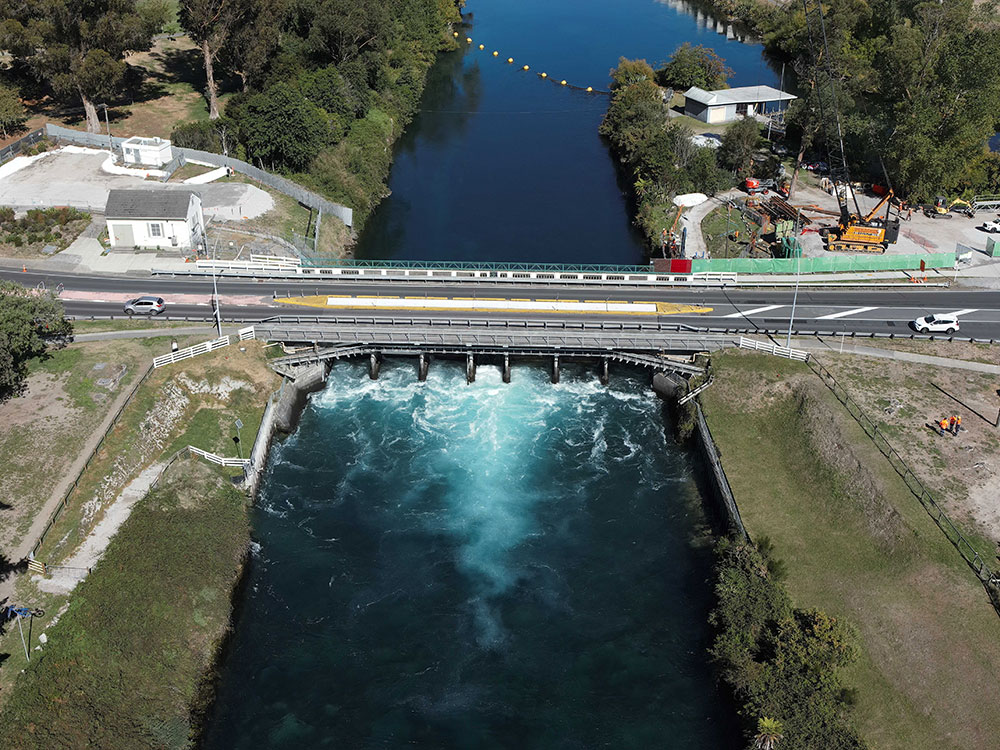
Mercury's Taupō Control Gates
Mercury owns and operates the Taupō Control Gates. It is a reinforced concrete structure built in 1941, on the bed of the Waikato River at the outlet of Lake Taupō.
The Control Gates regulate flows out of the lake and down the river to nine power stations downstream operated by Mercury, which form the Waikato Hydro System Catchment. The hydro system generates about 10% of New Zealand’s renewable energy demands.
While Mercury owns and operates the Control Gates, the surface of the bridge is owned by Taupō District Council for transport purposes.
Project Background
As part of Mercury’s ongoing Dam Surveillance programme, regular inspections of the Control Gates are carried out to ensure the structure is maintained, and structural integrity is ensured.
The inspections showed work needed to be done to address erosion on the river banks around the structure. To repair the erosion spots, we planned work to take place between August-December 2024 and February-June 2025. We also used this opportunity to complete the planned refurbishment of one set of Control Gates in the structure.
There were no immediate safety or operational risks to the road, to the bridge, or the way the water flows are managed through the Control Gates. But it wasimportantthis planned work was advanced to ensure the Control Gates can operate reliably.
Project Overview
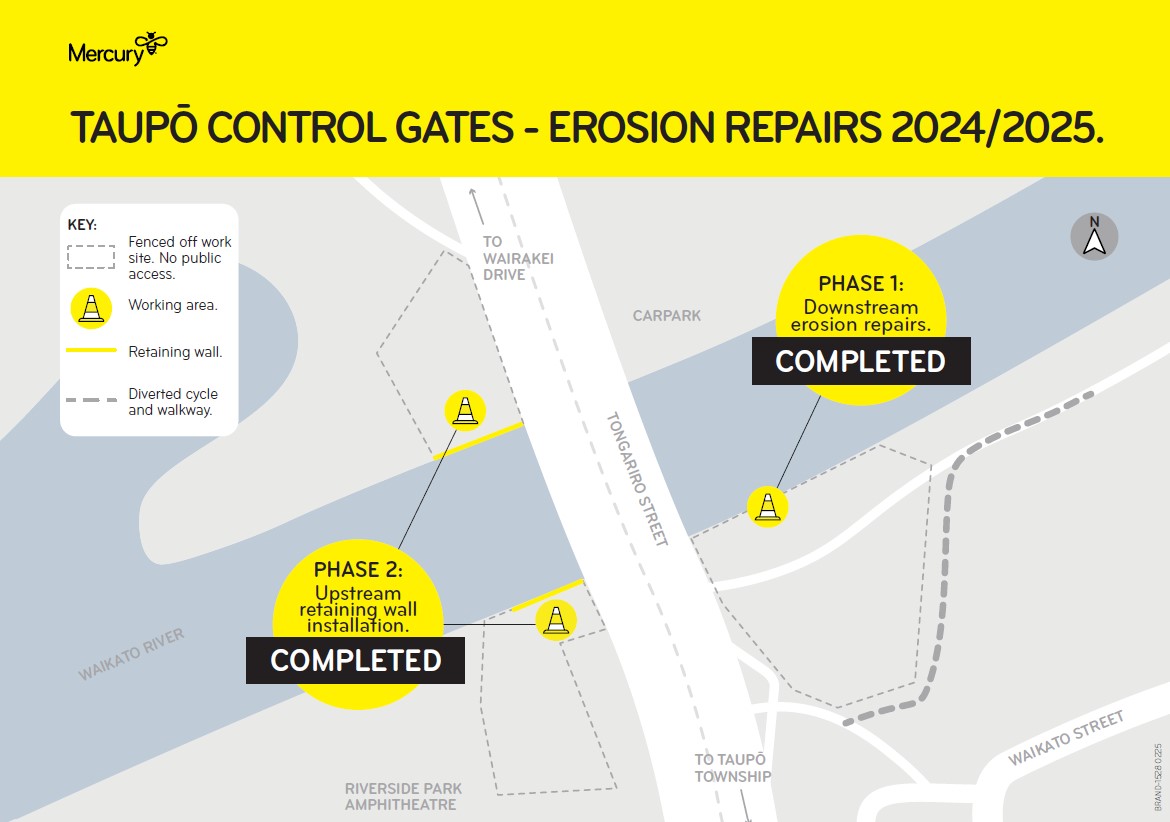
Phase1 was completed in 2024. It involved installing new dam safety instruments around the structure, filling in an erosion spot which has formed downstream from the Control Gates, on the river's southern side. We also used this time to refurbish one of the sixControl Gates.
Phase 2 of the work was completed between February and June 2025 and involved erosion protection upstream of the Control Gates, on both sides of the river. Specialist equipment was used to install 12m-long sheets to protect the riverbanks from erosion.]
People can also contact the project team via email: TaupoControlGates@mercury.co.nz
Read more about the Control Gates here.
2025 Milestones
- We began phase 2 of the project in February which involved installing a retaining wall on both sides of the Waikato River, immediately upstream of the Control Gates.
- During March we moved heavy machinery into place to begin work on installing the retaining walls on the south side of the river.
- By the end of April, we completed the construction of the retaining walls on both sides of the river.
- In May we completed the installation of a grout seal between the new sheet pile walls and the existing structure.
2024 Completed Milestones
- In August, we completed some ground investigation work and installed new instruments to improve our understanding of the underlying geology of the Taupo Control Gates ahead of the main erosion repairs starting.
- Main works kicked off in September, working on the downstream erosion repairs on the town side of the river (Phase 1). Ngā Hapū O Te Hikuwai O Tūwharetoa provided cultural inductions to our project team before we started the main body of work.
- We activated accidental discovery protocols three times during these initial works; the first two times accounted for two sets of bones we found and a third time for some old wood. After putting works on hold within the immediate area, our archaeologist quickly established the bones were from animals and wood from a tree. The Phase 1 work will be finished in November, achieving our key project objectives, and with great care taken for our people, the land and the awa.
- Ngā Hapū O Te Hikuwai O Tūwharetoa cultural advisor will provide a small ceremony to close phase 1 work, and the koiwi (bones) and wood will be re-instated under the planting of a native tree in the area.
- We removed one of the control gates from the bridge for refurbishment in late October during the night and plan to put it back into service in December.
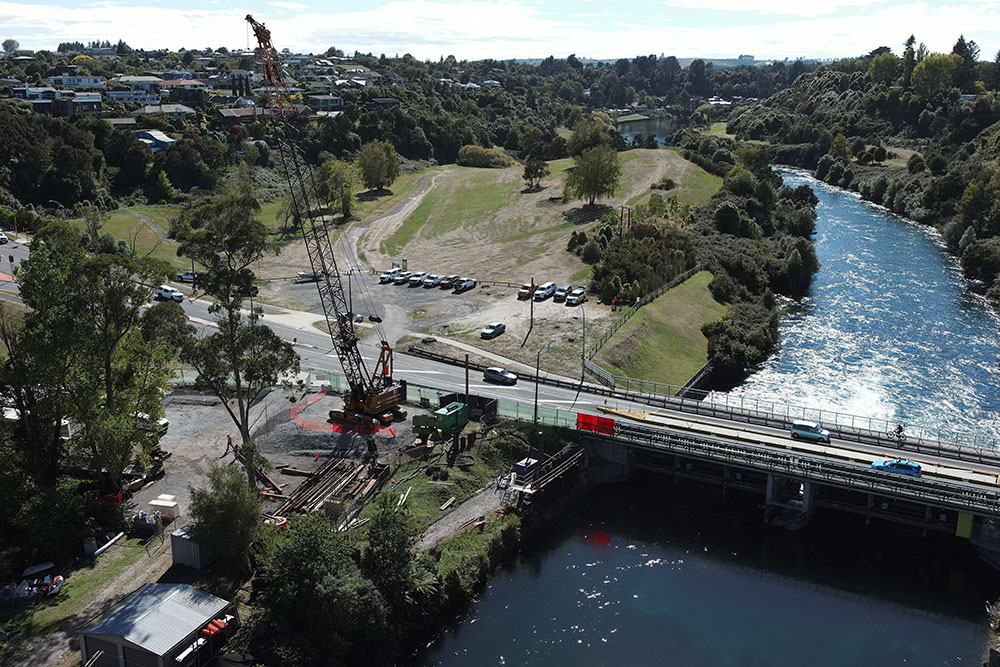
A crane and other specialist equipment is being used to install metal sheets to protect the riverbanks from erosion.
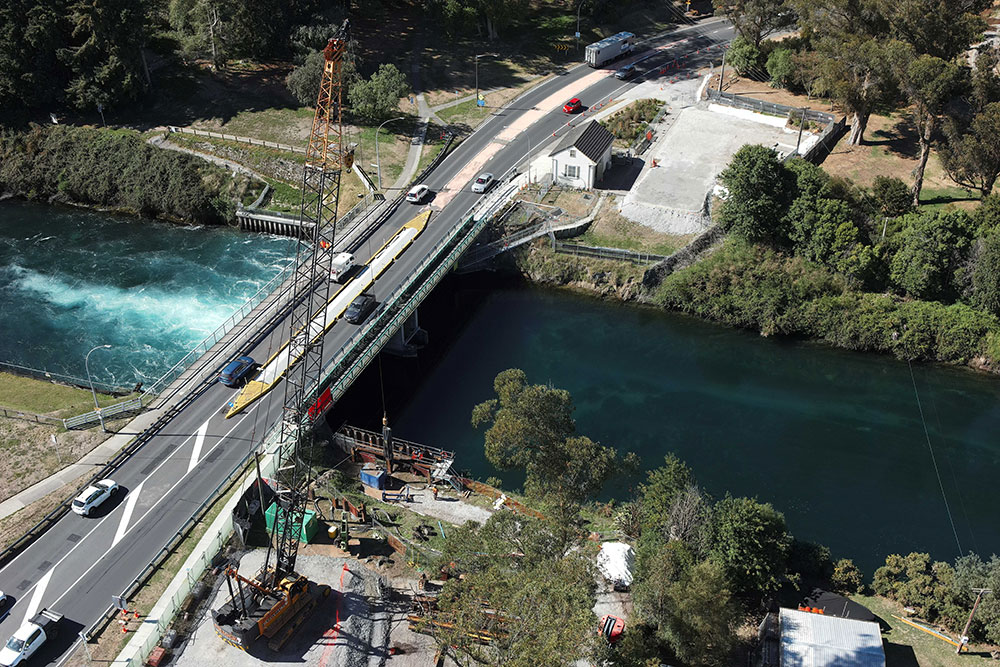
The metal sheets will be installed on both sides of the river, upstream of the Control Gates.