FEATURE
28 July 2026
Anthony Burger: Keeping hydro dams standing strong for future generations
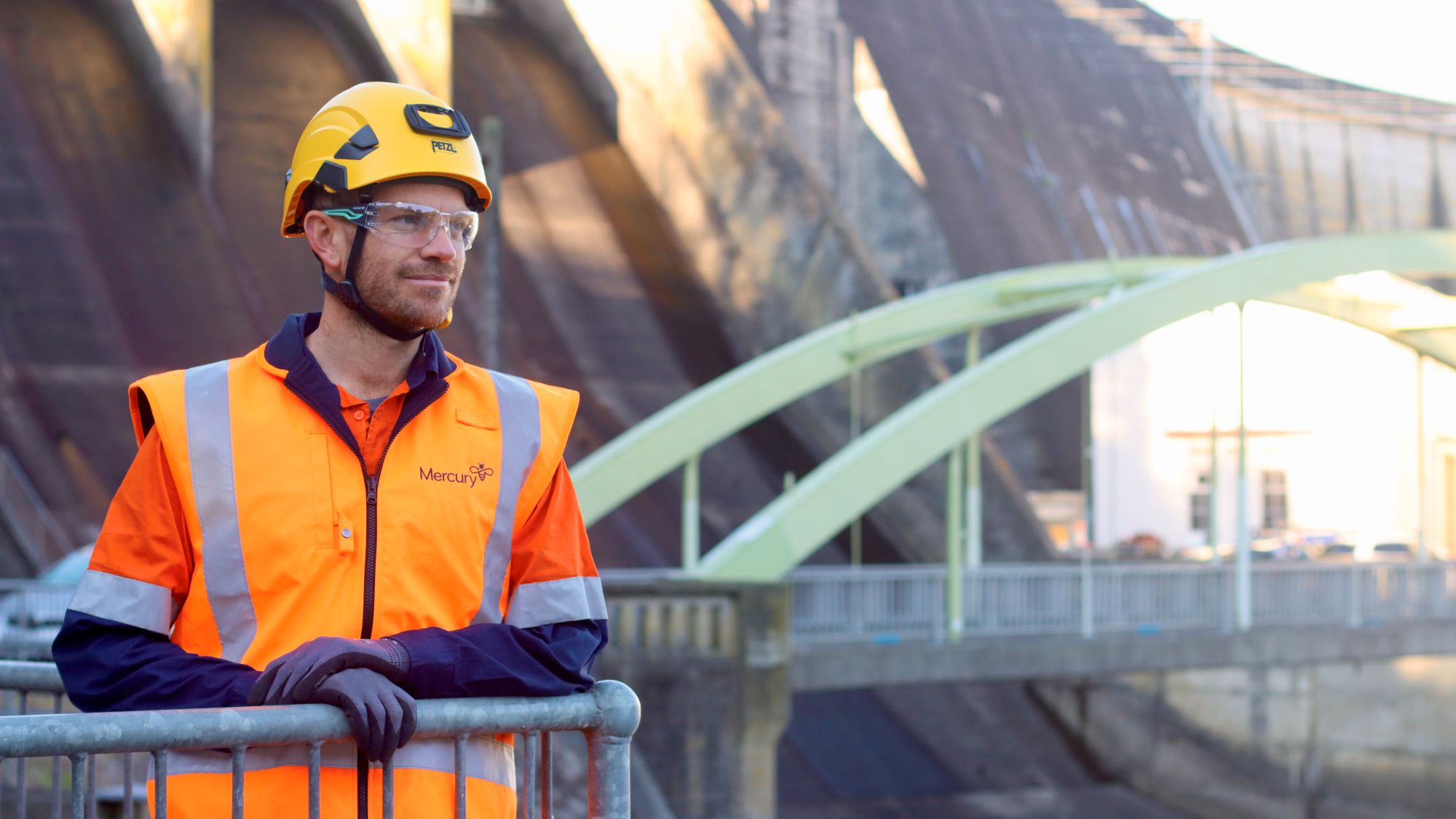
Anthony Burger is a specialist engineer in Mercury's Dam and Process Safety Team.
A civil engineer who is motivated by “solving complex problems” is among a team of specialists making sure Mercury’s eight hydro dams continue to stand the test of time.
Anthony Burger is in the Dam and Process Safety Team tasked with delivering the Dam Safety Assurance Programme for the Waikato Hydro System.
“Our programme involves a series of different tasks that generate data we use to evaluate and verify the performance of each dam.
“It’s about making sure the dams remain safe. In engineering terms that means they are upright, stable, and we have controlled the seepage.”
Anthony is among Mercury’s team of hardworking people who show up to work every day to help keep New Zealand powered.
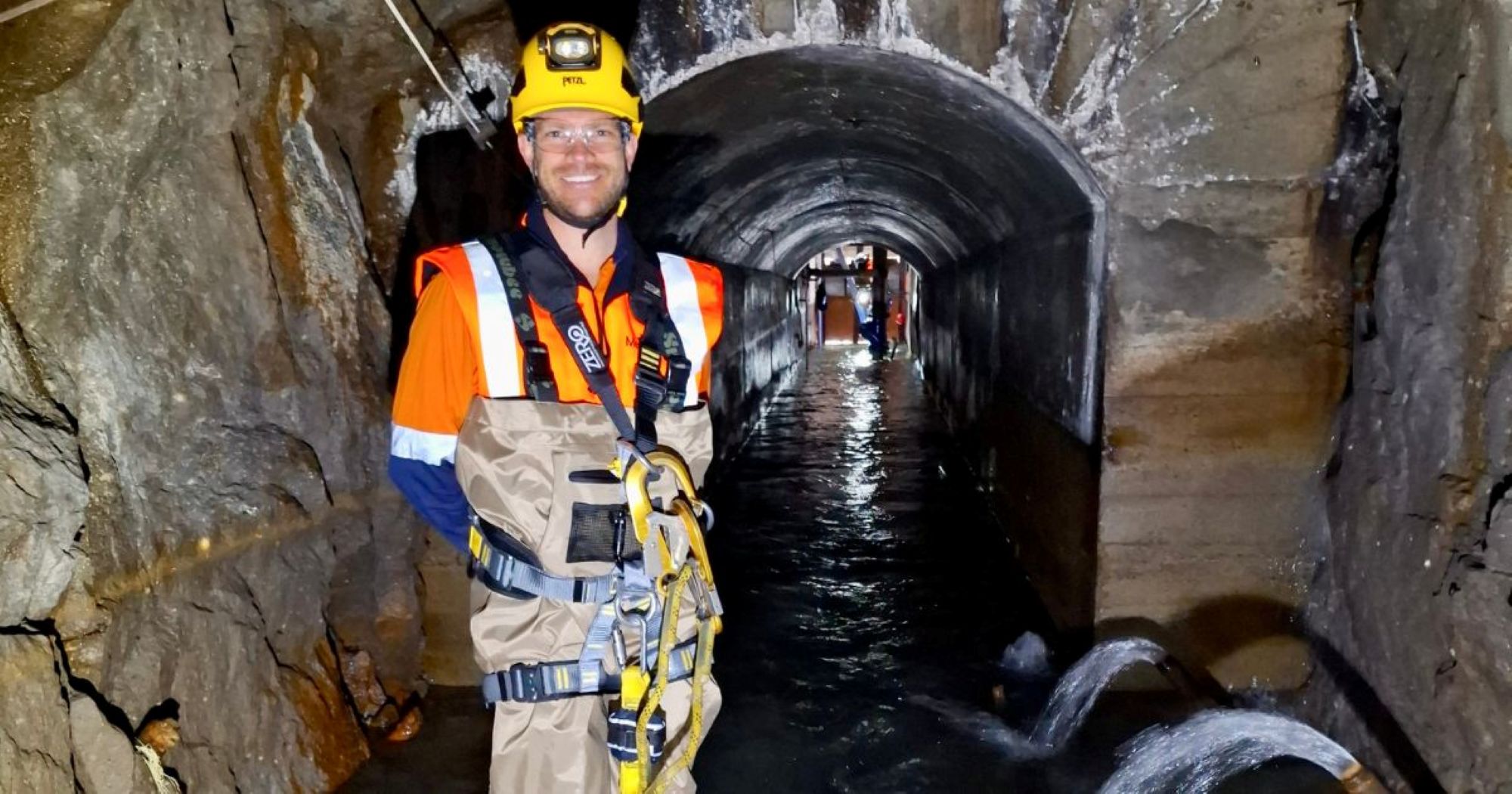
Working inside the diversion tunnel at the Karāpiro Hydro Dam and Station.
The decisions he makes ensure Mercury can safely deliver a secure energy supply.
Anthony immigrated from South Africa in 2019 and worked at large design consultancy firms in Hamilton before joining Mercury in 2025.
It was a career change that provided new opportunities to move from consulting to asset management.
“There’s quite a difference between working in a consultancy where you’re working with planning, design and construction [projects], to a role where you’re managing and caring for an asset that was built a long time ago."
The hydro power industry also appealed to Anthony because of its historic role as the backbone of New Zealand's electricity development.
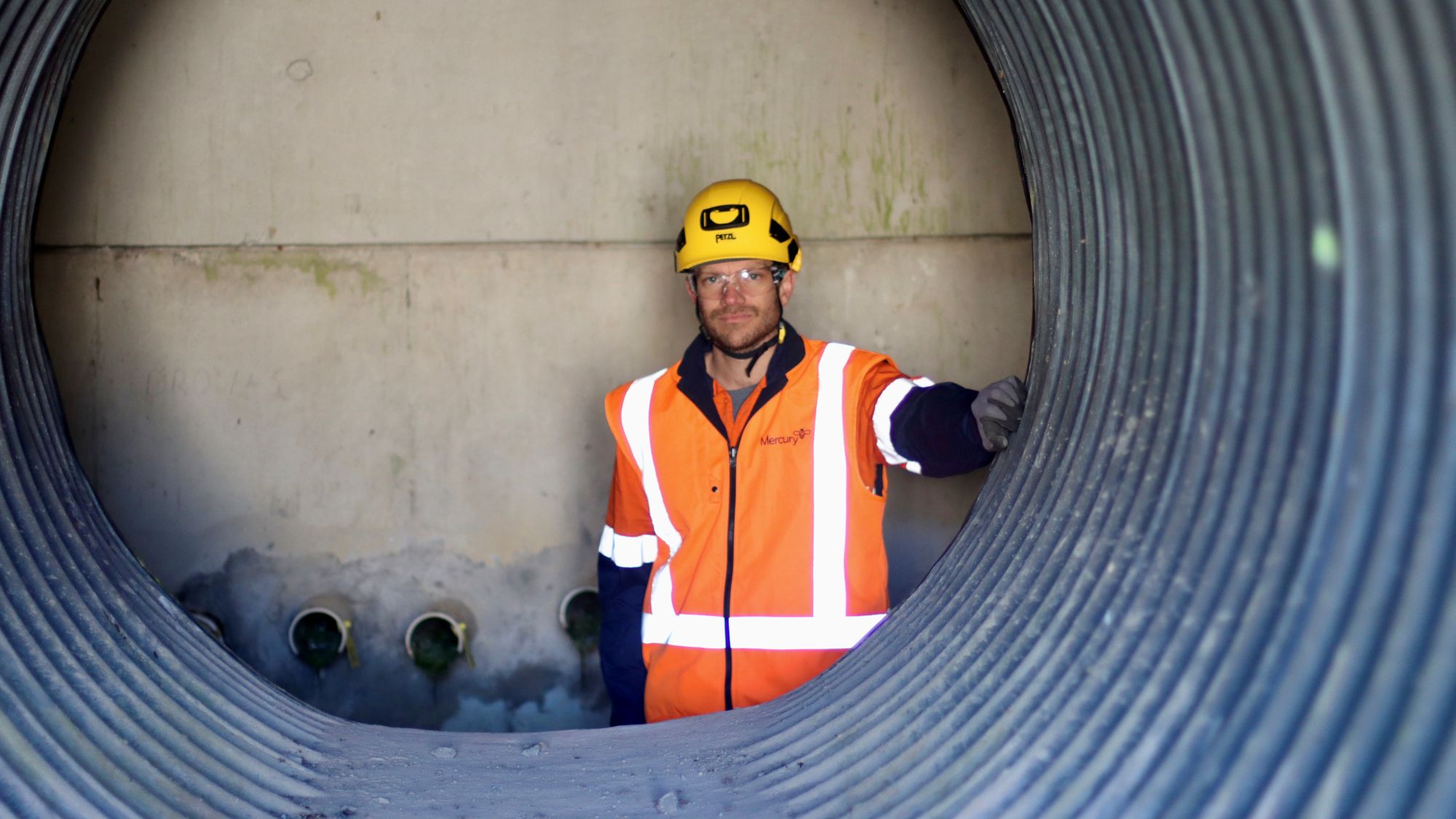
Inspecting one of the water drainage systems on the left abutment of the Karāpiro Hydro Dam.
“Our hydro dams are complex; there's a lot of history, a lot to learn about them. They are full of interesting details that need to be discovered and understood so that things can make sense.
“But I like solving interesting problems - that’s my currency - it’s more satisfying than dealing with something that is routine and repetitive."
A typical day for Anthony varies; it could involve writing dam safety reports, site inspections or specific project work.
"Our primary role is to support the Dam Safety Assurance Programme, examining the data we have on each dam and detecting any changes in the performance.
"The other part of the role is more focused on investigating dam safety issues and developing solutions to previously identified problems."
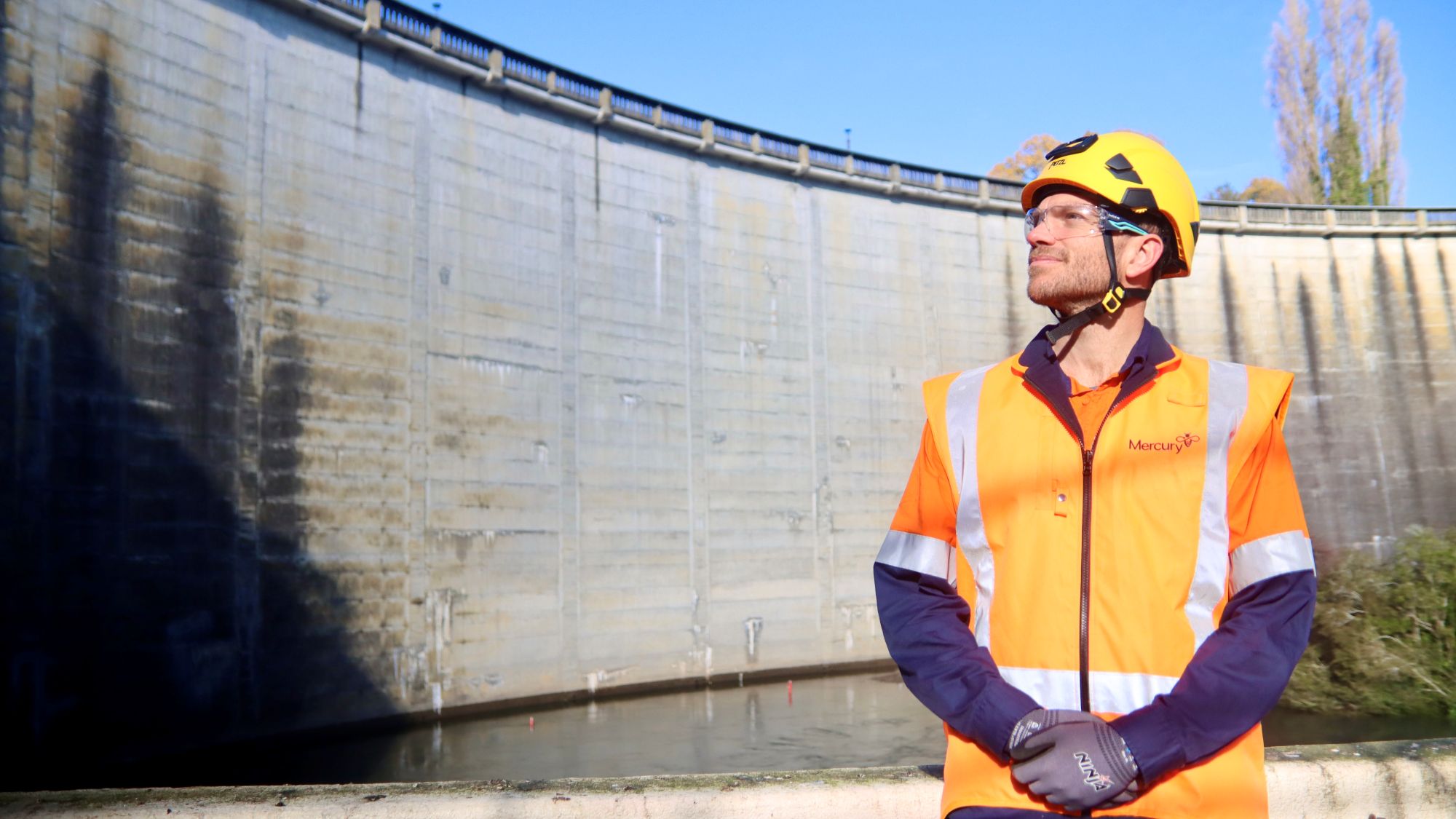
Next to the Karāpiro Hydro Dam.
One example was a repair project for the diversion tunnel at the Karāpiro Hydro Dam.
"We designed a repair to resolve some concrete erosion, brought in the right people to do the work, and managed to put the asset back into full service."
Anthony said some investigations turn into bigger projects, like at the Arapuni Hydro Dam, where a multi-year work programme is planned to remediate the dam's left abutment seepage controls.
"Working across all of these types of projects provides a chance to speak with site leads, contractors and consultants, who all have a high level of knowledge about these assets – and that's a great opportunity for me to learn."
Projects are interesting and provide great hands-on experience but “number crunching” for reports is also an important part of the job.
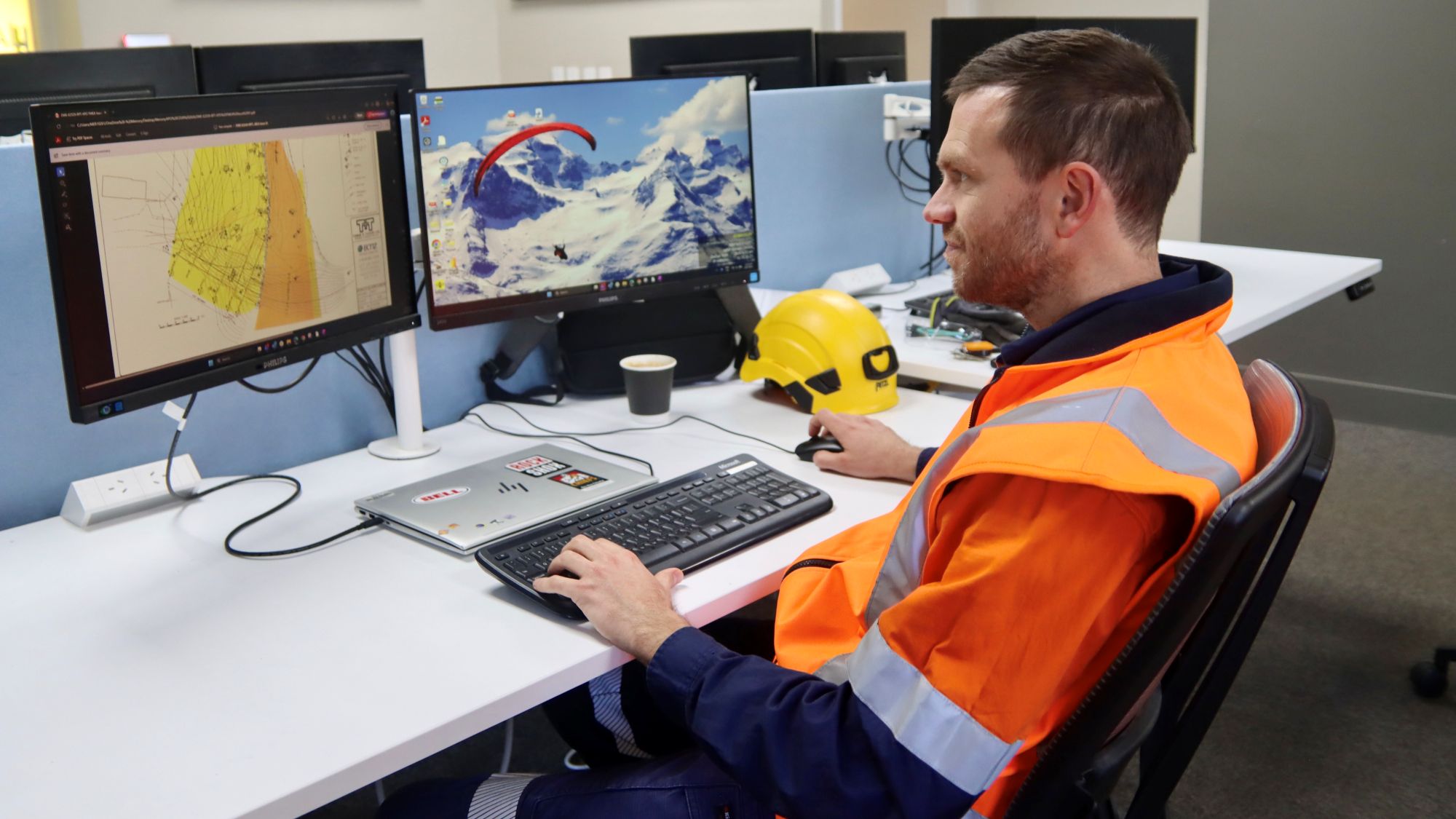
Crunching the numbers on data gathered from hydro dams for annual and five-yearly reviews.
"In the dam safety world, we have to complete annual safety reviews and five-yearly comprehensive safety reviews, something which is mandated by new government regulations.
“The annual report looks at our surveillance of each dam’s performance over the past 12 months.
"The five-yearly review allows us to zoom out and consider data collected over the past five years and evaluate that against the construction, modifications and historic performance of the dam.
"This enables us to detect any incremental changes that we need to address.”
Anthony said demand for engineers in the energy sector would continue to increase as New Zealand moves towards a higher level of electrification.
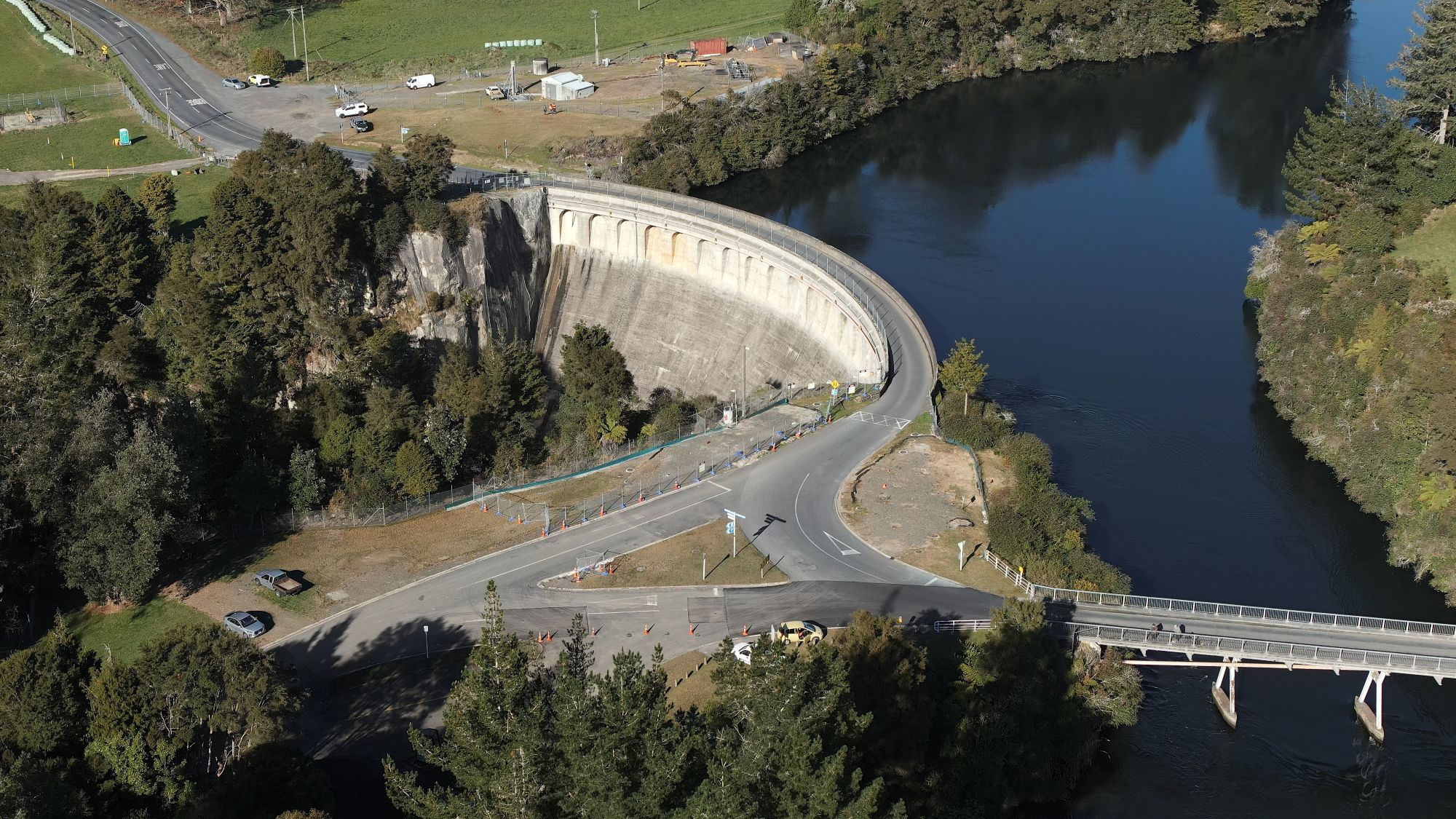
Arapuni Hydro Dam where major work is underway to improve seepage controls.
And he wanted his time at Mercury to be about continual improvement and learning, so he could effectively care for the longevity of the hydro system.
"I like to think this is more of a custodian role, where I get the opportunity to look after a special piece of New Zealand’s history.
"Our hydro dams have been operating for somewhere between 60 to 100 years, and we'd like to see them go for another 60 to 100 years, or more.
"That's beyond my lifetime but we can help set up our systems and do our work diligently to help make that goal achievable for future generations."
Read more stories in our Brighter Together series.