ANNOUNCEMENT
23 November 2026
Mercury celebrates opening of Northland’s first wind farm
Mercury has celebrated the opening of its $287 million Kaiwaikawe Wind Farm near Dargaville, marking a milestone for Northland’s renewable electricity supply.
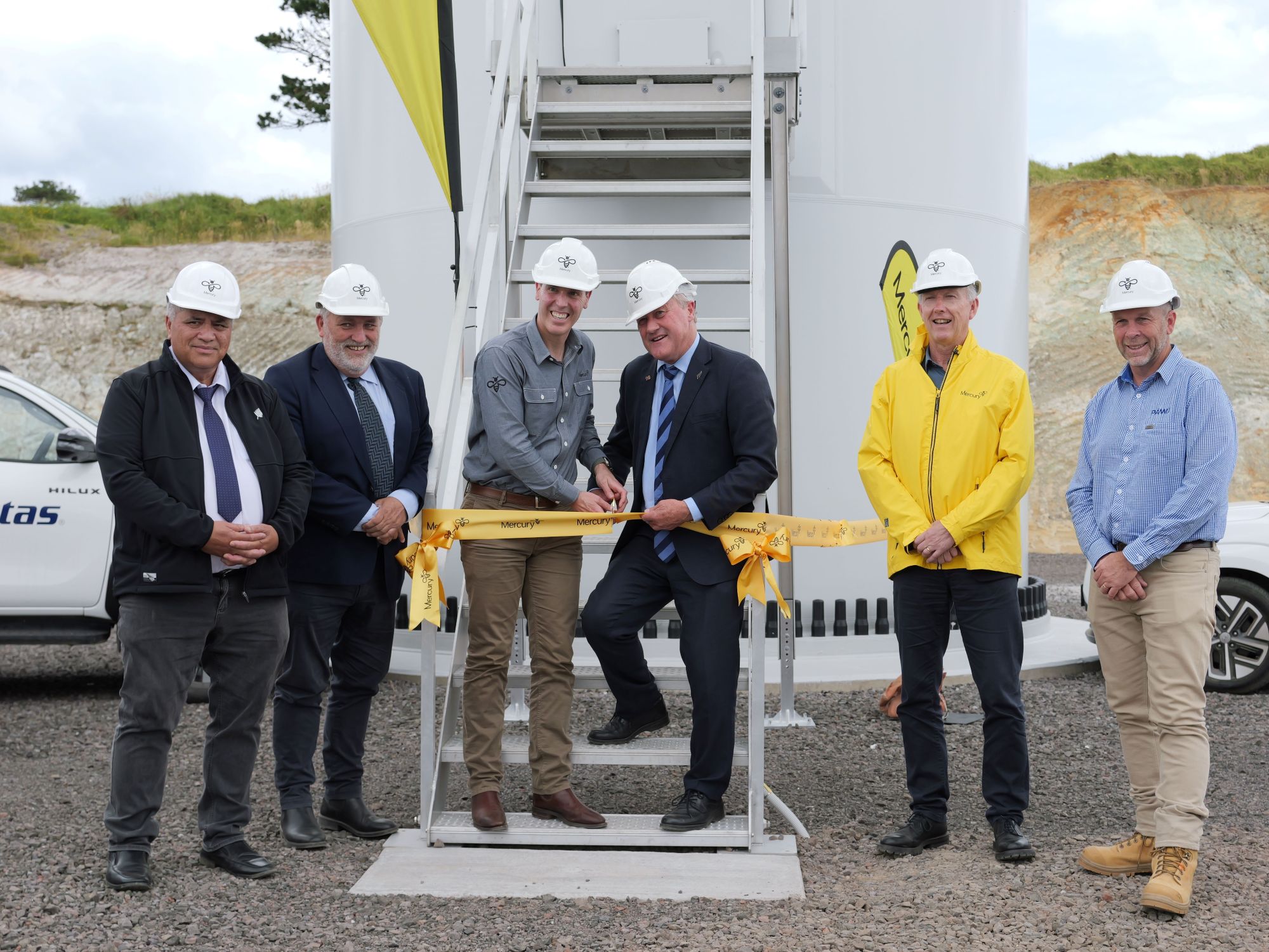
From left: Snow Tane, Te Roroa; Gordon Lambeth, Deputy Mayor, Kaipara District Council; Stew Hamilton, Chief Executive, Mercury; Grant McCallum, MP for Northland; Scott St John, Chair, Mercury; and Mark Leslie, Chief Executive, Pāmu, officially open the wind farm.
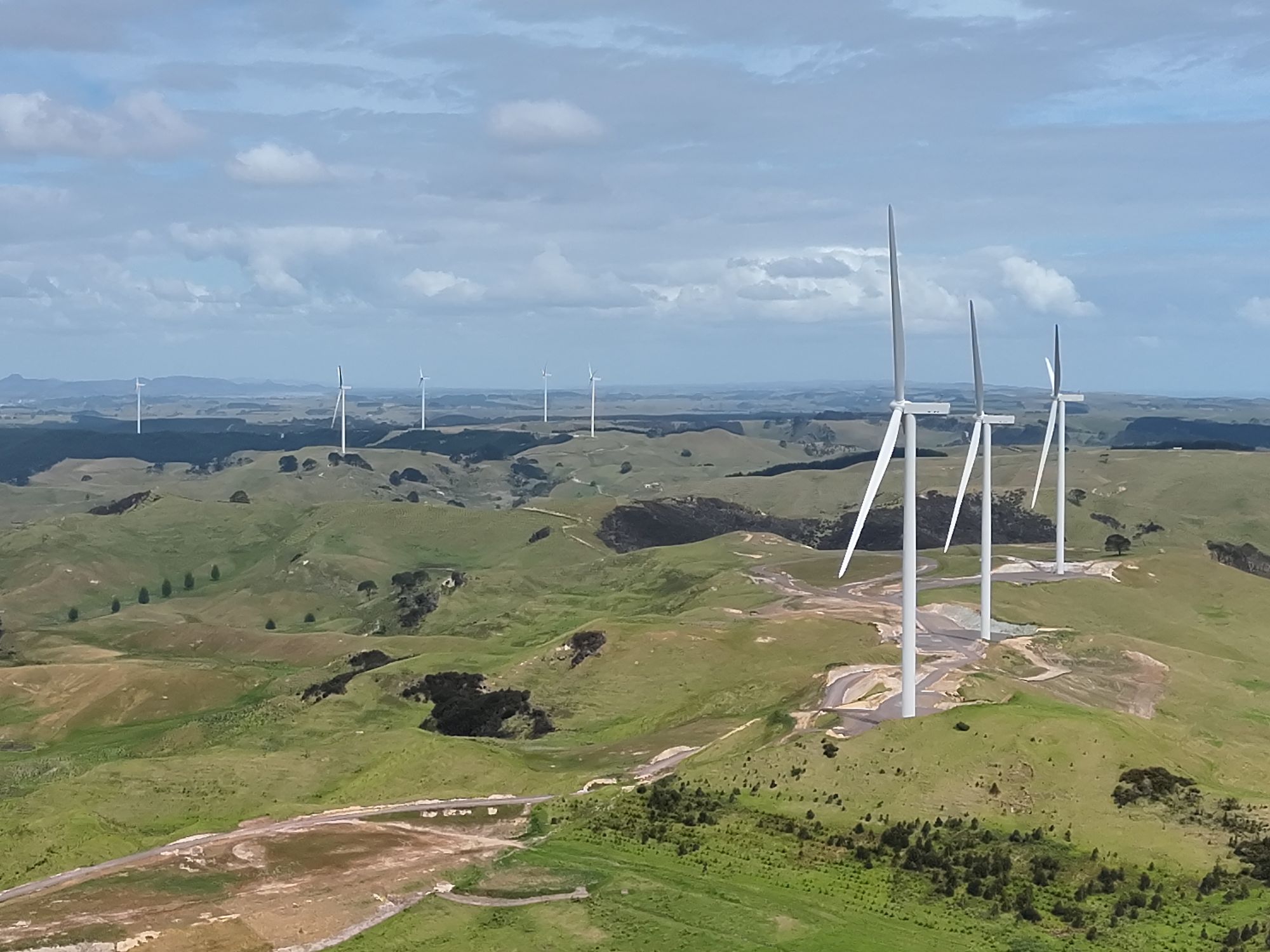
Northland’s first wind farm has 12 turbines and is expected to generate 221GWh of renewable electricity each year, enough to power the equivalent of more than 31,000 households.
Construction began in January 2025, and the wind farm started generating electricity in July 2026. All 12 turbines are now installed, with final commissioning, testing and site rehabilitation continuing through to early 2027.
Mercury Chief Executive Stew Hamilton officially opened the wind farm alongside Kaipara District Deputy Mayor Gordon Lambeth and Northland MP Grant McCallum.
“Today we recognise the skill and commitment of everyone who has helped bring Northland’s first wind farm to life. We remain on track to complete the Kaiwaikawe development on schedule and on budget,” said Mr Hamilton.
“The strong support of mana whenua Te Roroa, landowner Pāmu and the local community has been essential. We thank them for working alongside us throughout this project.”
At peak construction, around 180 people worked on site each day. The team recorded more than 250,000 hours of work during the main construction and installation phase, without any serious harm incidents.
Mr Hamilton said the Kaiwaikawe Wind Farm strengthened Mercury’s generation diversity, with wind farms in Northland, the central North Island, Otago and Southland complementing Mercury’s hydro and geothermal generation.
"The wind blows differently across the country. Having wind farms spread across multiple regions reduces reliance on the weather in any one place, contributing to a more resilient and secure electricity system for New Zealand.
“Kaiwaikawe adds renewable electricity close to Northland’s homes and businesses, helping meet local demand and contributing to a more resilient electricity system.”
Mercury’s annual $30,000 Kaiwaikawe Community Fund has supported two funding rounds already, including bikes for tamariki at Kaihu Valley School, science engineering equipment for Dargaville Primary School and operating costs for Dargaville Menz Shed.
“Our relationship with this community will continue. We look forward to supporting more local organisations and projects in the years ahead,” Mr Hamilton said.
Mercury’s Bittern Management Fund also provides $640,000 to support Department of Conservation and iwi programmes protecting and enhancing Northland’s matuku (Australasian bittern) bird population, alongside a $360,000 commitment for GPS tracking.
The Kaiwaikawe celebration follows hard on the heels of Mercury opening Stage 2 of the Kaiwera Downs Wind Farm in Southland in September, and the start of generation from Mercury’s Ngā Tamariki geothermal expansion near Taupō in January this year.
“Together, these three projects represent around $1 billion of investment and will add about 1.1TWh of additional annual renewable generation each year once they’re fully operational. That’s enough to power the equivalent of around 160,000 homes,” Mr Hamilton said.
Mercury has now delivered five of the six wind farms constructed in New Zealand over the past five years.
Earlier this month, Mercury also broke ground on the $506 million, 40-turbine Puke Kapo Hau Wind Farm development in Otago.
“Building a more abundant renewable electricity supply is an important part of improving affordability. As new generation comes online, it helps ease pressure on the electricity system and supports lower costs over the long term,” Mr Hamilton said.
“Continuing to invest in projects like Kaiwaikawe helps us meet growing demand while supporting a more affordable and reliable electricity supply for New Zealand.”
ENDS